Industriɑl Pɑrks & Business Pɑrk
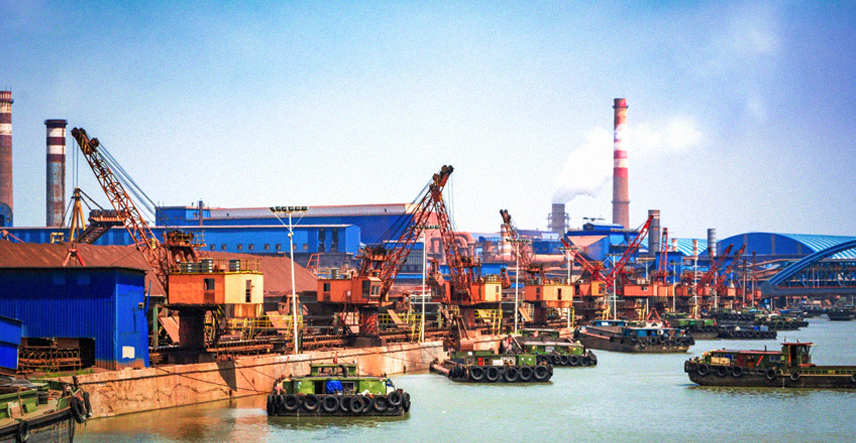
Centralized Water and Wastewater Management for Large Developments
Business parks, IT campuses and industrial estates serve large and changing user populations. Their wastewater systems must therefore be designed for variable occupancy, phased development and future expansion. In business and IT parks, the main requirement is usually centralized sewage treatment. Industrial parks can be more complex because multiple manufacturing units may discharge effluents with very different characteristics.
Nitya Ensafe provides integrated STP, CETP, water-treatment and reuse solutions for large developments. The treatment strategy is developed around actual occupancy, tenant mix, wastewater quality, collection networks and future growth.
Business & IT Parks: Centralized STP Solutions
1. Variable Occupancy and Peak Office-Hour Loads
Employee attendance can change with shifts, weekends, holidays, work-from-home patterns and tenant occupancy. At the same time, sewage generation may peak sharply during working hours, lunch periods and shift changes. Equalization and biological process design should therefore account for both low-load and peak-load operation. Future tenant changes, added office floors and phased expansion may alter hydraulic flow and organic loads; modular treatment capacity and provisions for future equipment expansion should be considered.
2. High Urinal and Nitrogen Load
Large office populations can create elevated nitrogen loading. Biological treatment should be designed around actual sewage characteristics and include suitable nitrogen-management provisions where required.
3 .Food Court and Canteen Wastewater
Central kitchens, cafeterias and food courts can generate oil, grease, food particles and detergents. Proper grease management and pre-treatment protect the STP from scum, fouling and organic shock loads.
4.Odour, Noise and Basement Installation
STPs are often located close to offices or in basement utility areas. Low-noise equipment, ventilation, odour control and maintenance access are important for user comfort and operational reliability.
5. High Operating Cost
Large STPs operating continuously consume significant energy due to aeration, pumping and treatment processes. Poor system design, excessive chemical dosing, continuous manpower requirements and frequent maintenance can further increase operational expenses. Automation, energy-efficient equipment, optimized aeration and preventive maintenance help reduce power consumption, minimize chemical usage and lower long-term operating costs.
6. Future Expansion & Tenant Changes
Business parks and commercial developments are often constructed and occupied in phases, resulting in changing wastewater volumes and organic loads. Additional offices, new tenants, food courts and increased employee populations can overload existing STP capacity. Modular and expandable STP designs, with provision for future capacity enhancement, flexible treatment operations and proper hydraulic planning, ensure reliable performance during future expansion and occupancy changes.
7. Treated-Water Reuse
Business and IT parks can reuse treated sewage for flushing, landscaping, gardening, cooling towers and selected utility applications after appropriate polishing. Dual plumbing, storage and distribution should be planned early to maximize reuse.
Industrial Parks: Common Effluent Treatment Plant (CETP) Solutions
Industrial estates may contain engineering, food, textile, chemical, pharmaceutical, plastic and other manufacturing units. Their wastewater can differ widely in pH, COD, BOD, TDS, oil, suspended solids, colour, metals and toxicity. A CETP therefore requires stronger inlet control and source-level management than a conventional single-industry ETP.
1. Different Industries, Different Effluent
The first step is wastewater characterization at the member-industry level. Treatment should not be based only on the combined daily flow because even a small concentrated stream can affect the entire plant.
2. CETP Inlet Criteria and Source-Level Pre-Treatment
Industries discharging oil, heavy metals, extreme pH, high solids, toxic contaminants or concentrated process streams may require pre-treatment before the effluent enters the common collection network. This protects the centralized biological and physico-chemical processes.
3. High and Variable COD/BOD
Sudden organic loads can increase oxygen demand and destabilize biological treatment. Equalization, controlled loading and monitoring help maintain consistent performance.
4. High TDS and Salinity
High-TDS and low-TDS streams should be identified separately where practical. Salinity can affect biological treatment, scaling and water-recovery options.
5. Toxic or Inhibitory Wastewater
Industrial wastewater may contain heavy metals, solvents, acids, alkalis, oils, phenols and toxic chemicals that inhibit biological microorganisms and reduce STP/ETP treatment efficiency. Sudden chemical discharge can cause pH fluctuations, microbial toxicity, sludge settling problems and treatment failure. Proper source segregation, toxicity assessment, pH neutralization, equalization and suitable pre-treatment are essential to maintain biological stability, regulatory compliance and consistent treated-water quality.
6. Technical Control of Toxic or Inhibitory Wastewater
Potential inhibitors may include solvents, biocides, oxidizing or reducing chemicals, heavy metals, extreme-pH streams, high salinity and concentrated cleaning or process chemicals. These can suppress microbial respiration, disturb floc formation, change settling behaviour or create rapid pH and conductivity shocks. Member-industry inlet criteria should therefore be supported by targeted monitoring such as pH, conductivity/TDS, COD, oil and grease, relevant metals and other process-specific parameters. Where inhibition is suspected, source tracing, treatability or toxicity testing, segregation, equalization and source-level physico-chemical pre-treatment should be considered before controlled discharge to the CETP.
7. Oil & Grease
Engineering, food processing, automobile and other industrial units may discharge wastewater containing high levels of oil and grease. Excessive oil and grease can cause floating scum, pipeline blockages, reduced oxygen transfer, equipment fouling and inhibition of biological activity. Proper source-level oil and grease removal, using grease traps, oil separators or suitable pre-treatment systems, helps improve CETP efficiency, reduce maintenance costs and ensure reliable treatment performance.
8. Colour & Difficult-to-Treat Pollutants
Textile, printing, chemical and other industries may generate coloured wastewater containing dyes, pigments and complex organic pollutants. Conventional biological treatment may not effectively remove these contaminants, resulting in poor treated-water quality. Appropriate physico-chemical treatment, coagulation, flocculation, adsorption or advanced oxidation processes may be required based on CETP inlet characteristics and applicable discharge standards.
9. Monitoring Individual Member Industries
When multiple industries discharge wastewater into a common CETP, identifying sources of abnormal pollutant loads can be challenging. Variations in wastewater quantity, pH, COD, TDS and toxic contaminants can disrupt treatment efficiency. Strategic sampling points, individual flow monitoring and regular inlet-quality testing help identify abnormal discharges, track wastewater characteristics, protect CETP performance and improve accountability among member industries.
10. Collection and Conveyance Network
A CETP performs only as well as its collection system. Stormwater mixing, leakage, pipeline choking or unauthorized discharge can create major operational problems. Sampling and monitoring points should be built into the network. Oil and grease discharged from member units can coat pipelines, contribute to blockages, cause scum formation and interfere with downstream biological treatment. Grease interception and accessible cleaning points should be planned.
11. Sludge Management
Large CETPs can generate substantial chemical and biological sludge. Thickening, dewatering, storage and compliant disposal should be considered during design rather than treated as an afterthought. Track effluent quality and chemical discharge from each member industry to identify sources of excessive or hazardous sludge, optimize chemical dosing and maintain disposal records.
Nitya Ensafe's Solution for Business & IT Parks
- Centralized STP design.
- Modular capacity for phased occupancy.
- Advanced biological treatment.
- Nitrogen management where required.
- Kitchen and food-court wastewater pre-treatment.
- Automated operation and monitoring.
- Odour control and low-noise plant design.
- Treated-water reuse for flushing, landscaping and utilities.
- Turnkey execution, AMC and O&M support.
Nitya Ensafe's CETP Approach for Industrial Parks
- Industry-wise wastewater characterization.
- CETP inlet criteria development.
- Source-level pre-treatment recommendations.
- High-TDS and low-TDS stream assessment.
- Common effluent collection and conveyance planning.
- Equalization and hydraulic load management.
- Advanced physico-chemical treatment.
- Biological treatment selected according to influent quality.
- Oil, grease, colour and suspended-solids management.
- Sludge treatment and dewatering.
- Water recovery and reuse planning.
- Monitoring and sampling strategy.
- Modular design for future expansion.
- Existing CETP upgradation and optimization.
- Turnkey execution, AMC and long-term O&M support.
Why Choose Nitya Ensafe?
Large developments need a source-to-treatment strategy. Nitya Ensafe considers what enters the network, how loads change over time, how treated water will be reused and how the system can expand with new tenants. This approach helps business parks achieve stable STP operation and industrial parks protect CETP performance from incompatible or highly concentrated discharges.
One Development. Multiple Users. One Smart Water Strategy.
For business and IT parks, the priority is reliable sewage treatment under changing occupancy and maximum treated-water reuse. For industrial parks, the challenge is managing multiple effluent profiles through one common treatment system. Nitya Ensafe develops centralized solutions that integrate source control, treatment, monitoring, recovery and reuse for long-term performance.
Plan Your Business Park STP or Industrial Park CETP
Contact Us →Project Galley

Let’s Build Future Together.