Water Scarcity is Rising: Can Treated Sewage Become the Next Reliable Water Source?
For decades, wastewater was viewed as a disposal challenge. Today, it is increasingly being recognized as a valuable resource.
As industrial growth accelerates and urban populations continue to expand, the pressure on freshwater resources is becoming more evident. Industries, residential townships, hospitals, hotels, and commercial developments all depend on a consistent water supply, yet the availability of freshwater remains limited.
This raises an important question: Can treated sewage water become a dependable alternative water source?
The Growing Water Challenge
Gujarat has witnessed rapid industrial and urban development over the last decade. While economic growth creates opportunities, it also increases water demand.
Freshwater sources such as rivers, reservoirs, and groundwater aquifers face increasing stress due to:
- Population growth
- Industrial expansion
- Urban development
- Climate variability
- Rising water consumption
As demand continues to increase, water procurement costs are also rising, making sustainable water management a priority for every organization.
The Untapped Potential of Treated Sewage
Every residential complex, commercial building, institution, and industrial facility generates domestic wastewater from washrooms, kitchens, canteens, and other sanitary facilities.
Traditionally, the objective of sewage treatment was safe disposal. Modern wastewater management, however, focuses on treatment and reuse.
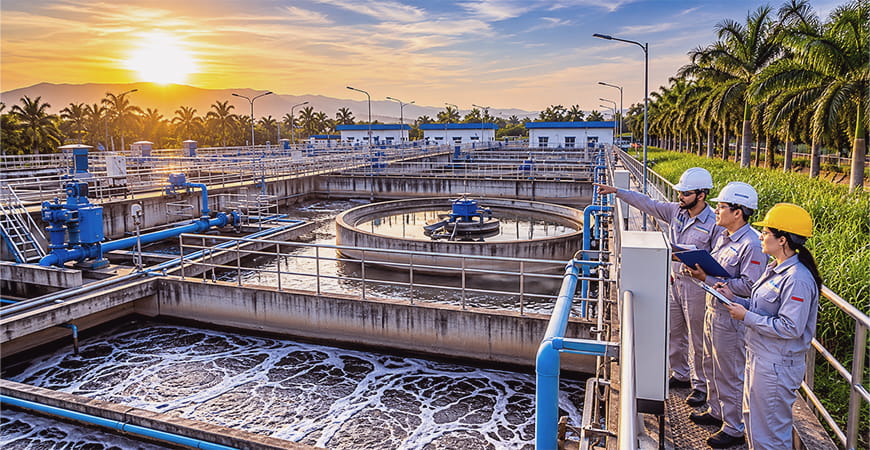
With proper treatment through a Sewage Treatment Plant (STP), wastewater can be converted into a reusable resource suitable for:
- Landscape irrigation
- Toilet flushing
- Cooling tower makeup
- Utility applications
- Floor cleaning
- Dust suppression
This reduces dependence on freshwater while creating a sustainable internal water source.
Why Recycling Makes Business Sense?
For many facilities, a significant portion of water consumption does not require potable-quality water.
Instead of using expensive freshwater for non-potable applications, treated sewage can effectively meet these requirements.
The benefits include:
- Reduced freshwater consumption
- Lower water procurement costs
- Improved regulatory compliance
- Enhanced environmental performance
- Better preparedness for future water shortages
In many cases, wastewater recycling projects provide long-term economic benefits while strengthening operational sustainability.
Compliance is Only the Beginning
Environmental regulations increasingly encourage wastewater treatment and reuse. However, organizations that view STPs solely as compliance systems often miss a larger opportunity.
A properly designed sewage treatment and recycling system helps organizations move towards:
- Water-positive operations
- Sustainable infrastructure
- ESG commitments
- Resource conservation goals
Wastewater management is no longer only about disposal—it is about resource recovery.
Building a Circular Water Future
The future of water management lies in maximizing the value of every drop.
As water availability becomes a critical business concern, organizations that invest in wastewater recycling today will be better positioned to manage future challenges. Treated sewage water is no longer a waste stream—it is an alternative water source that can support long-term growth and sustainability.
How Nitya Ensafe Supports Sustainable Water Management?
At Nitya Ensafe, we help industries, developers, institutions, and commercial establishments transform wastewater into a reusable resource through efficient treatment, recycling, and environmental compliance solutions.
From STP design and wastewater reuse planning to turnkey project execution and regulatory support, our focus is on helping organizations create sustainable water infrastructure for the future.