Activated Sludge Process (ASP) in STP: Everything You Need to Know
As cities expand and water demand continues to rise, efficient sewage treatment has become essential for sustainable development. Residential townships, hospitals, hotels, industries, institutions, and commercial buildings generate large volumes of wastewater every day. If this wastewater is not treated properly, it can contaminate natural water bodies, affect groundwater quality, and create public health risks.
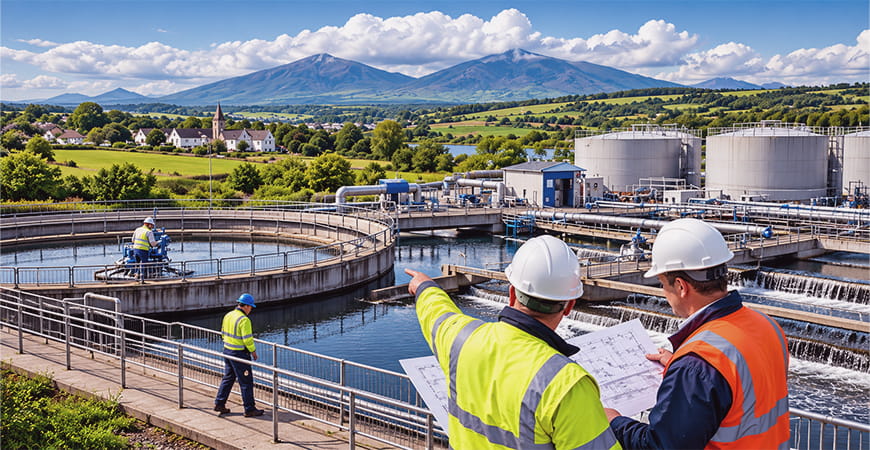
Among various biological treatment methods used in Sewage Treatment Plants (STPs), the Activated Sludge Process (ASP) remains one of the most reliable and widely adopted technologies for treating domestic wastewater.
What is the Activated Sludge Process?
The Activated Sludge Process is a biological wastewater treatment method in which microorganisms break down organic pollutants present in sewage.
In this process, wastewater is mixed with active microbial biomass inside an aeration tank. Oxygen is supplied through diffusers or aerators to support microbial growth. These microorganisms consume organic matter and convert it into biological solids, carbon dioxide, and treated water.
The treated mixture then flows into a settling tank, where the microbial flocs settle as sludge and clarified water is separated for further treatment or discharge.
Key Components of an Activated Sludge Plant
1. Aeration Tank
The aeration tank is the heart of the ASP system. Here, wastewater comes in contact with microorganisms under controlled oxygen conditions.
Proper aeration is critical because it directly affects:
- BOD removal efficiency
- Microbial activity
- Odour control
- Overall treatment performance
Aeration also contributes significantly to energy consumption, making efficient design important for long-term operation.
2. Secondary Clarifier
After biological treatment, the mixed liquor enters the secondary clarifier. In this tank, activated sludge settles at the bottom while clarified treated water flows from the top.
Good settling performance is essential to achieve low suspended solids in treated effluent.
3. Return Activated Sludge System
A portion of settled sludge is returned to the aeration tank as Return Activated Sludge (RAS).
This helps maintain the required microorganism concentration in the system and ensures stable biological treatment.
4. Waste Activated Sludge System
Excess sludge generated during the process is removed as Waste Activated Sludge (WAS).
This sludge must be properly thickened, dewatered, treated, and disposed of to maintain plant efficiency and environmental compliance.
Why Activated Sludge Process is Effective?
The Activated Sludge Process is widely used because it offers high treatment efficiency when properly designed and operated.
It can effectively reduce:
- BOD
- COD
- Total Suspended Solids
- Organic load
- Odour-causing pollutants
With appropriate tertiary treatment such as pressure sand filtration, activated carbon filtration, ultrafiltration, and disinfection, treated water can be reused for gardening, flushing, cooling towers, floor washing, and other non-potable applications.
Factors Affecting STP Design and Cost
The cost and design of an activated sludge-based STP depend on several technical and site-specific factors:
- Plant capacity and daily sewage flow
- Inlet BOD, COD, TSS, oil & grease levels
- Land availability
- Technology selection
- Aeration system efficiency
- Sludge handling requirements
- Treated water reuse objective
- Regulatory discharge standards
- Operation and maintenance requirements
A technically sound design not only ensures compliance but also reduces long-term operating cost and improves plant reliability.
Nitya EnSafe’s Approach to STP Solutions
At Nitya EnSafe, we design wastewater treatment systems with a focus on performance, compliance, sustainability, and operational efficiency.
Our STP solutions are developed after understanding the project’s wastewater characteristics, space constraints, reuse requirements, and regulatory obligations.
From process selection and design engineering to execution, optimization, and environmental compliance support, we help organizations build reliable sewage treatment infrastructure for long-term value.
A well-designed STP is not just a treatment system. It is a responsible investment in water conservation, environmental protection, and sustainable growth.